Be yourself; Everyone else is already taken.
— Oscar Wilde.
This is the first post on my new blog. I’m just getting this new blog going, so stay tuned for more. Subscribe below to get notified when I post new updates.

Hydraulics and Water Resources Engineering Division
Be yourself; Everyone else is already taken.
— Oscar Wilde.
This is the first post on my new blog. I’m just getting this new blog going, so stay tuned for more. Subscribe below to get notified when I post new updates.
Four Senior High School students under the guidance of Dr. Marla Maniquiz Redillas of the Civil Engineering Department – Hydraulics and Water Resources Engineering Division in De La Salle University have been selected to present at the 3rd DLSU Senior High School Research Congress. The announcement was made last April 14 via Facebook and email.
Al Patrick Castro, Ma. Aleissa Janelle Castillo, Carmela Rose Timario, and David Timothy Go, who are currently on the STEM track and enrolled in PRACRES (Practical Research), submitted a research paper entitled Assessment on the Feasibility of Permeable Pavement for Sustainable Stormwater Management Using SWMM.
The feasibility of permeable pavement for sustainable stormwater management in a university setting, specifically the De La Salle University (DLSU) – Laguna Campus was investigated by the group. Moreover, the software Stormwater Management Model or SWMM was used to conduct the said study.
In the paper, it was concluded that permeable pavement is effective in infiltrating, storing, and reducing surface runoff, which is beneficial for long-term stormwater management and flood prevention strategies.
The group will present in at the virtual conference on April 30, 2021, Friday, via Zoom. The two-day DLSU Senior High School Research Congress will be held from April 29 to April 30. Click here for the event’s full schedule and list of activities.
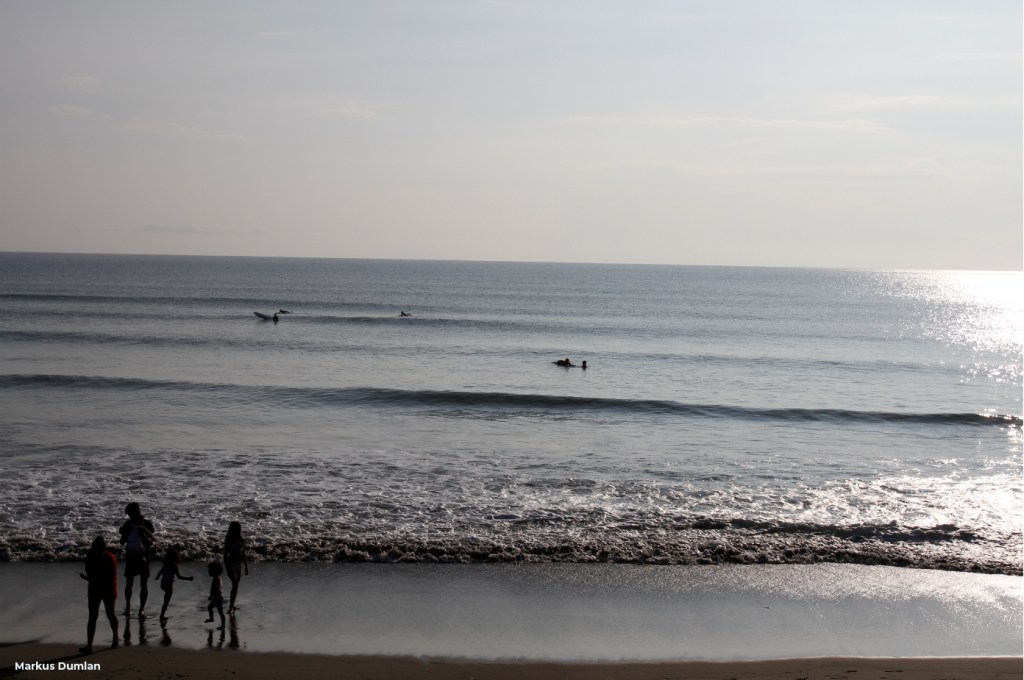
” Don’t get set into one form, adapt it and build your own, and let it grow, be like water. Empty your mind, be formless, shapeless — like water. Now you put water in a cup, it becomes the cup; You put water into a bottle it becomes the bottle; You put it in a teapot it becomes the teapot. “
~BRUCE LEE
In our daily life, one of the necessities living on planet earth is water. But, it is also one of the most neglected natural resources as it is evident that our planet is mostly covered in water that it has already been taken for granted. In perspective, about 71% of the Earth’s surface is covered in water while the remaining 29% are the continents and land that we live in. But how much water is actually usable? As previously mentioned, although 71% of the Earth is covered in water approximately, 96% is saline or are contained within the oceans — while the remaining 3% are either fresh water or locked up in glaciers. With this in mind, we could easily tell how big of an impact water is in our daily lives.
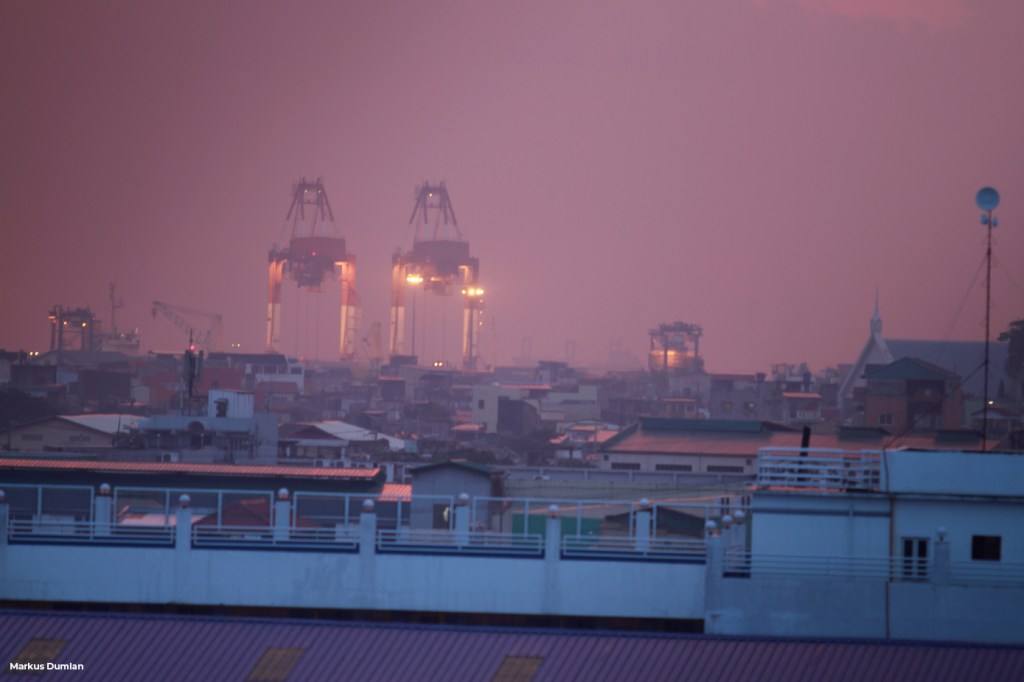
On the other hand, one of the things which have a major effect on water is land. From a local perspective it can be easily said that the Philippines is already overcrowded and there is poor water management in the country as it is normal for private companies to focus on profits first rather than sustainability. Statistically, based on the population census conducted by the Philippine Statistics Authority last 2015 the level of urbanization was at 51.4% (Perez, 2019). While the most populated region was still NCR with a population density of 20,785 persons per square kilometer during the time of study which shows an increase compared with the 2010 population census (PSA, 2016). As such, we could say that development and urbanization is continuously happening here in the country but at what cost? deforestation, exploitation of labor or something else?

Source : Rescuers evacuate residents from their flooded homes after Typhoon Vamco hit, in Marikina City, suburban Manila on November 12, 2020. (AFP)
Although there are constant developments happening on land, does it really provide benefits for our water use? In terms of water management how far have we really improved? In recent events such as typhoon Ulysses we could clearly see the impact of how we use water and land. Furthermore, with such events, it easily shows that there are more things to improve on within our current systems. It may be in terms of a strict implementation of laws to avoid deforestation and excessive exploitation of natural resources or integrating modern techniques and practices to further assist the current systems in play. What are your thoughts? How could we improve our life on planet Earth while having the perfect balance between development and sustainability?
For more information read more :
Perez, J. B. (2019, March 21). Urban Population in the Philippines (Results of the 2015 Census of Population). Retrieved from https://psa.gov.ph/content/urban-population-philippines-results-2015-census-population
Philippine Statistics Authority (PSA). (2016, September 01). Philippine Population density ( Based on the 2015 census of population ). Retrieved from https://psa.gov.ph/content/philippine-population-density-based-2015-census-population
Reuters. (2020, November 13). Typhoon Ulysses triggers worst floods in Metro Manila in years. Retrieved from https://newsinfo.inquirer.net/1359823/typhoon-ulysses-triggers-worst-floods-in-metro-manila-in-years
USGS. (n.d.). How Much Water is There on Earth? Retrieved from https://www.usgs.gov/special-topic/water-science-school/science/how-much-water-there-earth?qt-science_center_objects=0
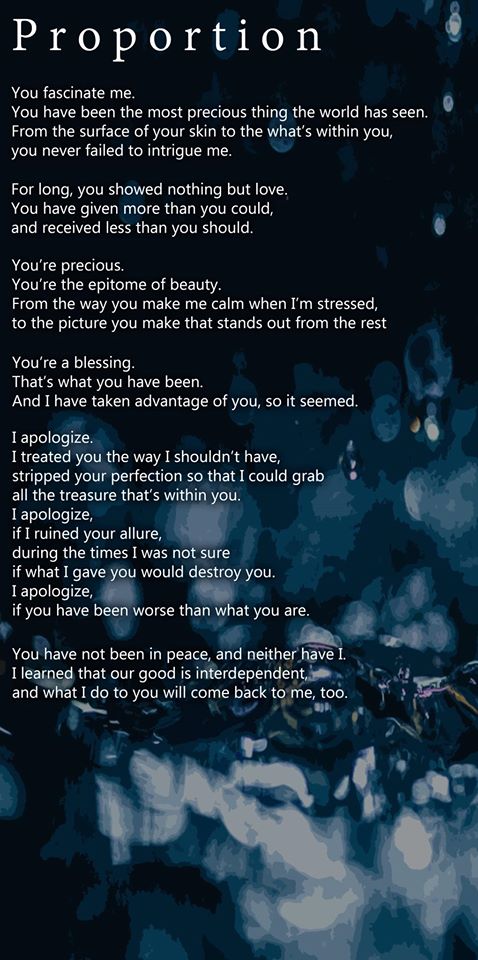
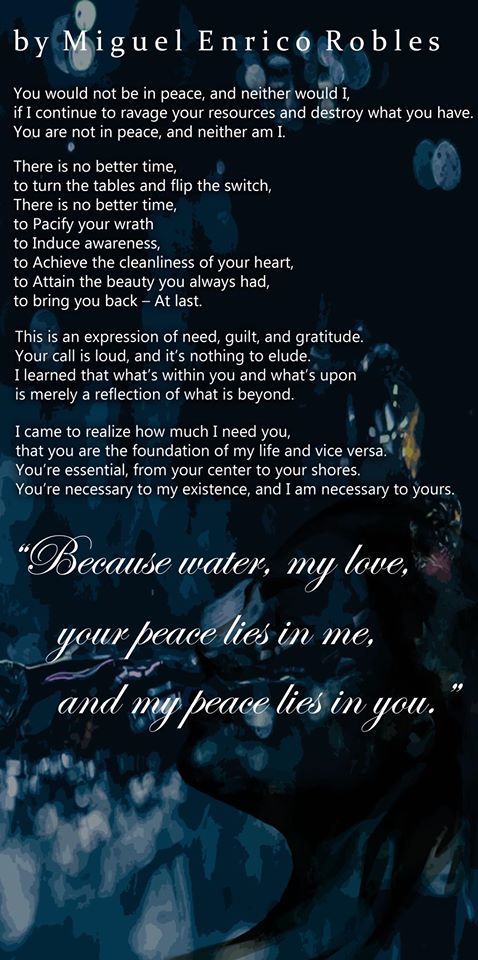
Where does our peace lie? Is water a reflection of who we are?
Here is the winning poem of Miguel Enrico Robles – first semifinalist in the Literature category of the “Imagine Blue Peace” honored to be part of the jury with Secrétariat international de l’eau – International Secretariat for Water and the World Youth Parliament for Water.
Congratulations again, Miguel!
Read more at http://bit.ly/2N3W6FE.
Artwork Design by: Lea Abiera
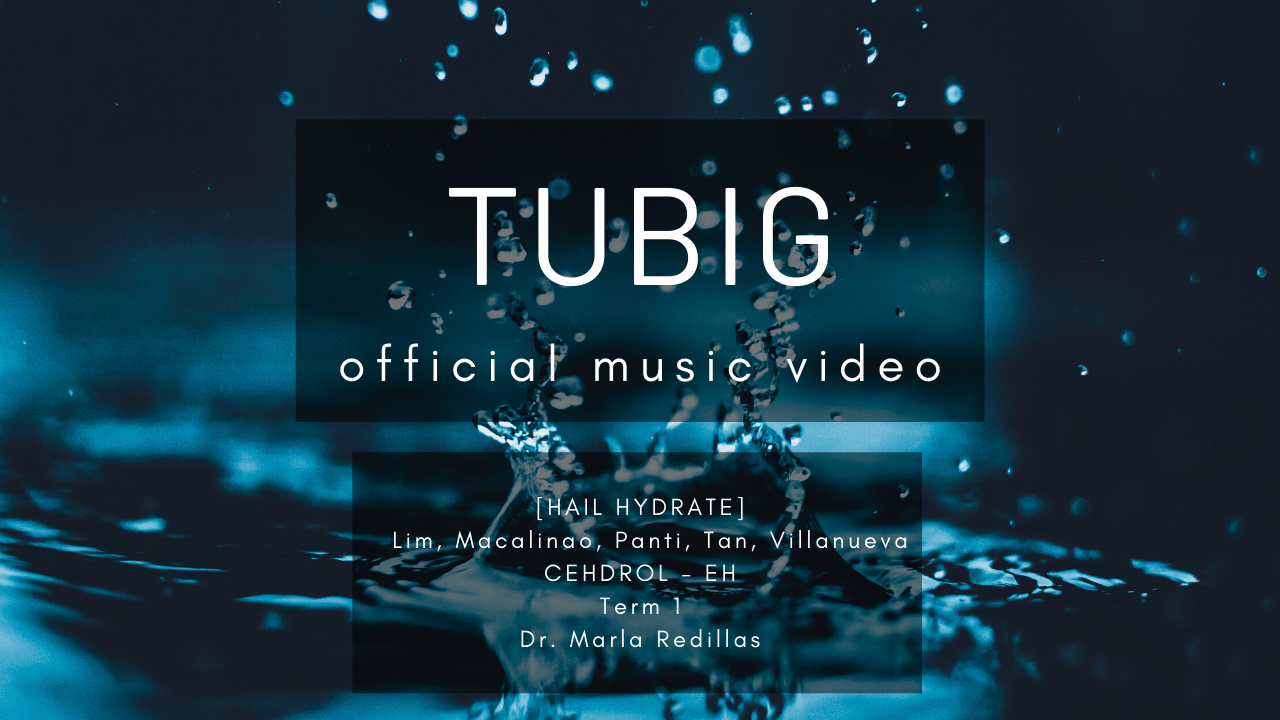
This video spreads awareness about current water problems in a unique and fun way. It features an adaptation of the song “Tala” by Sarah Geronimo only the lyrics have been tweaked to state some of the water problems in the Philippines and also to suggest some ways on how to handle these issues. The main purpose of the video is to serve as a call to action aimed towards the youth of today (hence the use of a popular song) so that together we can help create a better future for the succeeding generations.
For more videos: Please subscribe to DLSU WATER Youtube Channel https://tinyurl.com/DLSUWATERUTUBE
#HailHydrate #Ulan #AngTubigAyBiyaya #TubigOfficialMV
Water is finite but our demands for it are not!
Water is the basis of all life on Earth. Humans need water to drink, grow food, and clean. Water also provides amazing recreational opportunities (like swimming and fishing). Animals that live on land and those that live in lakes, ponds, and oceans also need clean water to survive and thrive.
As many water issues need broad public support and understanding, raising awareness on issues surrounding water resources is increasingly seen as important – as it is a way to build a common understanding of water issues and to create shared values on how water should be used and managed.
The De La Salle University Civil Engineering undergraduate students support our advocacy to promote water awareness through the #WaterAwarenessposTER (WATER) campaign.
Please like and share their posters (https://www.facebook.com/DLSUWaterAdvocates/) and join us in our #WATERcampaign so together we can live in a more water-wise world!
#DLSUWaterAdvocates#WaterIsLife
This is an example post, originally published as part of Blogging University. Enroll in one of our ten programs, and start your blog right.
You’re going to publish a post today. Don’t worry about how your blog looks. Don’t worry if you haven’t given it a name yet, or you’re feeling overwhelmed. Just click the “New Post” button, and tell us why you’re here.
Why do this?
The post can be short or long, a personal intro to your life or a bloggy mission statement, a manifesto for the future or a simple outline of your the types of things you hope to publish.
To help you get started, here are a few questions:
You’re not locked into any of this; one of the wonderful things about blogs is how they constantly evolve as we learn, grow, and interact with one another — but it’s good to know where and why you started, and articulating your goals may just give you a few other post ideas.
Can’t think how to get started? Just write the first thing that pops into your head. Anne Lamott, author of a book on writing we love, says that you need to give yourself permission to write a “crappy first draft”. Anne makes a great point — just start writing, and worry about editing it later.
When you’re ready to publish, give your post three to five tags that describe your blog’s focus — writing, photography, fiction, parenting, food, cars, movies, sports, whatever. These tags will help others who care about your topics find you in the Reader. Make sure one of the tags is “zerotohero,” so other new bloggers can find you, too.

 DLSU Water